How to Build a Restaurant Website for Your Food Business
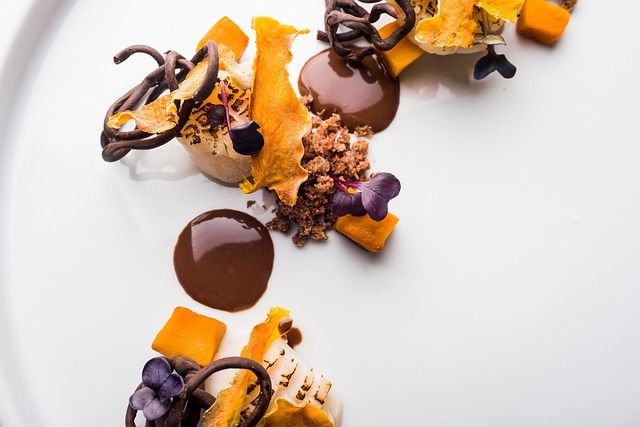
A well-built restaurant website is one of the most effective tools a food business owner in the Gulf or Egypt can have — it works around the clock, showcases your menu, and turns curious visitors into paying guests. Whether you run a casual café in Dubai, a shawarma chain in Riyadh, or a fine-dining restaurant in Cairo, this guide walks you through exactly what your website needs and how to get it live quickly, without writing a single line of code.
Why Your Restaurant Needs Its Own Website
Many restaurant owners in the UAE and Saudi Arabia rely entirely on Instagram or a listing on a delivery aggregator. Both have serious drawbacks: you do not own the audience, you pay a commission on every order, and you cannot control how your brand looks. A dedicated website fixes all three problems. It also gives you a permanent address to put on your trade licence documents, Google Business Profile, and printed menus.
In Saudi Arabia, if you take online payments you should be aware of ZATCA e-invoicing requirements and ensure your payment provider issues compliant tax invoices. In the UAE, VAT-registered restaurants must display VAT-inclusive prices and issue proper tax receipts. A good website setup handles this automatically when connected to the right payment gateway.
Decide What Your Website Must Do
Before you build anything, list the jobs your website needs to do. For most restaurant and food businesses in the Gulf, the list looks like this:
- Show your menu — with photos, descriptions, allergen notes, and prices in AED, SAR, or EGP.
- Accept reservations — a simple booking form or a link to a reservation tool saves your staff hours on the phone.
- Take online orders — either for delivery or click-and-collect, connected to a payment gateway your customers already trust, such as Tap, Moyasar, PayTabs, or Paymob.
- Display your location and opening hours — with a Google Maps embed so guests can find you easily.
- Build your WhatsApp channel — a click-to-chat WhatsApp button is essential for Gulf customers who prefer to message before they visit.
- Collect customer data — an email or SMS sign-up form lets you run promotions without paying for reach every time.
Write these down and keep them visible while you build. Every page decision should serve at least one of these goals.
Choose the Right Pages and Structure
A restaurant website does not need to be large. Five to seven pages, done well, outperform a sprawling site with thin content.
Home page: Your hero image should be a high-quality photo of your signature dish or your dining room. Include your name, a one-line description of what you serve and where, and two clear call-to-action buttons — "View Menu" and "Book a Table" (or "Order Now").
Menu page: Group items by category (starters, mains, desserts, drinks). Add photos wherever possible — research consistently shows that menu photos increase order values. If you serve both Arabic and international guests, consider a bilingual layout.
About page: Tell your story briefly. Who founded the restaurant, what is the concept, what makes your food different? Gulf diners, especially in Dubai and Riyadh, respond well to a genuine story behind a brand.
Reservations or Order page: Embed your booking form or link directly to your online ordering system. If you use a third-party POS system with an online ordering module, link to it here rather than duplicating the experience.
Contact page: Address, phone number, WhatsApp link, Google Maps embed, and a simple contact form. If you have multiple branches — common for growing restaurant groups in the UAE and Saudi Arabia — list each location separately with its own map pin.
Gallery (optional): A grid of food and atmosphere photos builds trust and is highly shareable on social media.
Connect Payments and Ordering
For restaurants taking online orders, payment integration is non-negotiable. In the UAE, Tap and PayTabs are widely used and straightforward to connect. In Saudi Arabia, Moyasar supports mada, Visa, and Mastercard and is the preferred choice for ZATCA-compliant transactions. In Egypt, Paymob and Fawry cover the broadest range of customers. If you want to offer buy-now-pay-later for higher-value catering orders or corporate bookings, Tabby integrates cleanly with most Gulf payment setups.
Make sure whichever gateway you use issues a proper VAT receipt automatically — this protects both you and your customer.
Optimise for Search and Mobile
The majority of restaurant searches in the Gulf happen on a mobile phone, often while someone is already hungry and looking for somewhere nearby. Your website must load fast and look perfect on a small screen. Compress your food photos before uploading — large image files are the single biggest cause of slow restaurant websites.
For search optimisation, include your city and neighbourhood naturally in your page text: "Italian restaurant in JBR, Dubai" or "healthy lunch delivery in Al Olaya, Riyadh" tells Google exactly who you serve. Add your restaurant to Google Business Profile and link it to your website — this is free and dramatically improves your visibility in local search results.
Write a unique title and meta description for each page. Your home page title might read: "Al Nakheel Grill — Grilled Seafood Restaurant in Abu Dhabi." Keep it factual and specific.
Build It Without Code
You do not need a developer to build a professional restaurant website today. Platforms like Stunning let you describe your restaurant and generate a fully structured, mobile-ready website using AI — you then customise the menu, photos, colours, and text through a simple visual editor. This approach is particularly useful for restaurant owners who need to go live quickly or who want to test a concept before committing to a full design agency budget.
Once your site is live, connect your chosen payment gateway, embed your WhatsApp button, and submit your sitemap to Google Search Console. From that point, your website is an asset that compounds in value every month as more people find you through search.
Keep It Updated
A restaurant website that shows last Ramadan's menu or a phone number that no longer works damages trust faster than having no website at all. Set a monthly reminder to check that your menu prices, opening hours, and contact details are accurate. If you run seasonal promotions or special iftar and weekend brunch menus — common across the Gulf — update the home page to reflect them. Fresh content also signals to Google that your site is active, which helps your ranking over time.
Create your restaurant website builder with Stunning
Describe it in plain language and Stunning builds the working system for you — no code required.
Related articles
Frequently asked questions
What pages does a restaurant website need?
At minimum: a home page, a menu page, a reservations or order page, and a contact page with your location and WhatsApp link. An about page and a photo gallery are useful additions once the essentials are in place.
Which payment gateway should I use for my restaurant website in the UAE or Saudi Arabia?
In the UAE, Tap and PayTabs are popular choices. In Saudi Arabia, Moyasar supports mada and is widely used for ZATCA-compliant online payments. In Egypt, Paymob and Fawry cover the widest range of customers. All of them can issue VAT receipts automatically.
Do I need a developer to build a restaurant website?
No. No-code platforms allow you to build and launch a professional restaurant website without writing any code. You can customise your menu, photos, and branding through a visual editor and connect a payment gateway without technical help.
How do I get my restaurant website to appear on Google?
Add your city and neighbourhood to your page text naturally, create a Google Business Profile and link it to your site, and submit your sitemap to Google Search Console. Compressing your images so the site loads quickly also improves your ranking.
Does my restaurant website need to comply with VAT rules in the UAE or Saudi Arabia?
Yes. VAT-registered restaurants in the UAE must display VAT-inclusive prices and issue proper tax receipts. In Saudi Arabia, ZATCA e-invoicing rules apply to online transactions. Connecting a compliant payment gateway like Moyasar or Tap handles receipt generation automatically.